HubSpot Integration
What the AI can do
Summary
HubSpot Integration connects HubSpot Meetings + CRM with Newo Platform.
It currently supports:
- checking appointment availability from a HubSpot meeting link
- creating bookings with contact lookup / contact creation in HubSpot CRM
- cancelling existing meetings by exact booking datetime
- existing customer lookup by phone/email with prompt injection
- storing upcoming bookings in persona data
- optional outbound conversation note sync after phone sessions
- optional default canvas seeding for booking and cancellation scenarios
This integration is designed for service businesses and sales teams that use a single HubSpot meeting link and want an AI agent to handle appointment availability, booking, and cancellation through chat or voice.
Common use cases
- When a customer asks about available times -> the agent checks HubSpot meeting-link availability and returns free slots
- When a customer wants to book an appointment -> the agent finds or creates a HubSpot contact and submits the booking
- When a customer wants to cancel an appointment -> the agent finds the matching HubSpot meeting by start time and deletes it
- When the platform detects a caller's phone number -> the integration looks up the existing HubSpot contact and injects customer context
- When a future meeting exists for that contact -> the integration stores it in persona
bookings - When an outbound phone session ends -> the integration can write a HubSpot note with transcript/summary
Features at a glance
| Feature | Supported | Notes |
|---|---|---|
| Check Availability | ✅ | Uses HubSpot meeting-link booking endpoint |
| Book Appointment | ✅ | Searches contact by email, creates contact if missing, then books |
| Cancel Appointment | ✅ | Finds meeting by exact start datetime, then deletes it |
| Existing Client Detection | ✅ | Searches HubSpot contacts by phone/email |
| Existing Booking Storage | ✅ | Saves future meetings into persona bookings |
| Silent Availability Preload | ✅ | session_started can trigger a silent availability check |
| Outbound Conversation Note Sync | ✅ | Only for Outgoing Phone sessions and when enabled |
| Canvas Auto Setup | ✅ | Seeds default booking/cancellation scenarios when enabled |
| Multi-Calendar / Multi-Slug | ❌ | Single hubspot_slug_name |
| Native Reschedule Flow | ❌ | Use cancel + rebook flow |
| Deal / Pipeline Automation | ❌ | Not implemented in current agent flows |
Before You Start
Before setup:
- active HubSpot account
- HubSpot Meetings enabled
- one working meeting link slug
- either:
- one OAuth authorization code from the Newo-provided HubSpot auth link
- or one HubSpot Service Key (PAT-style token) with the scopes your booking flows require
- correct business timezone
Current setup supports two authentication modes:
OAuthToken
Setup
Create the Newo project
If this project already exists in Newo Builder, skip this subsection and continue with the integration-specific settings below.
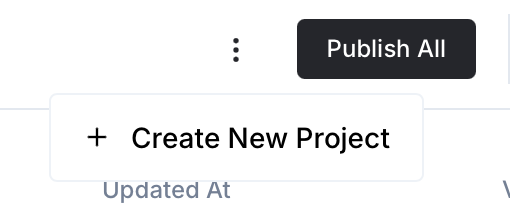
- In Newo Builder, open the projects list and click Create Project (or Create New Project from the top-right menu).
- Fill IDN and Title. The exact names do not matter; use any clear names your team will recognize.
- In Registry, choose the release channel:
- staging — the newest module fixes appear here first. Use it when you need the latest fix, but expect possible unfinished changes.
- production — the final stable version for live projects.
- In Module, select the module for this integration.
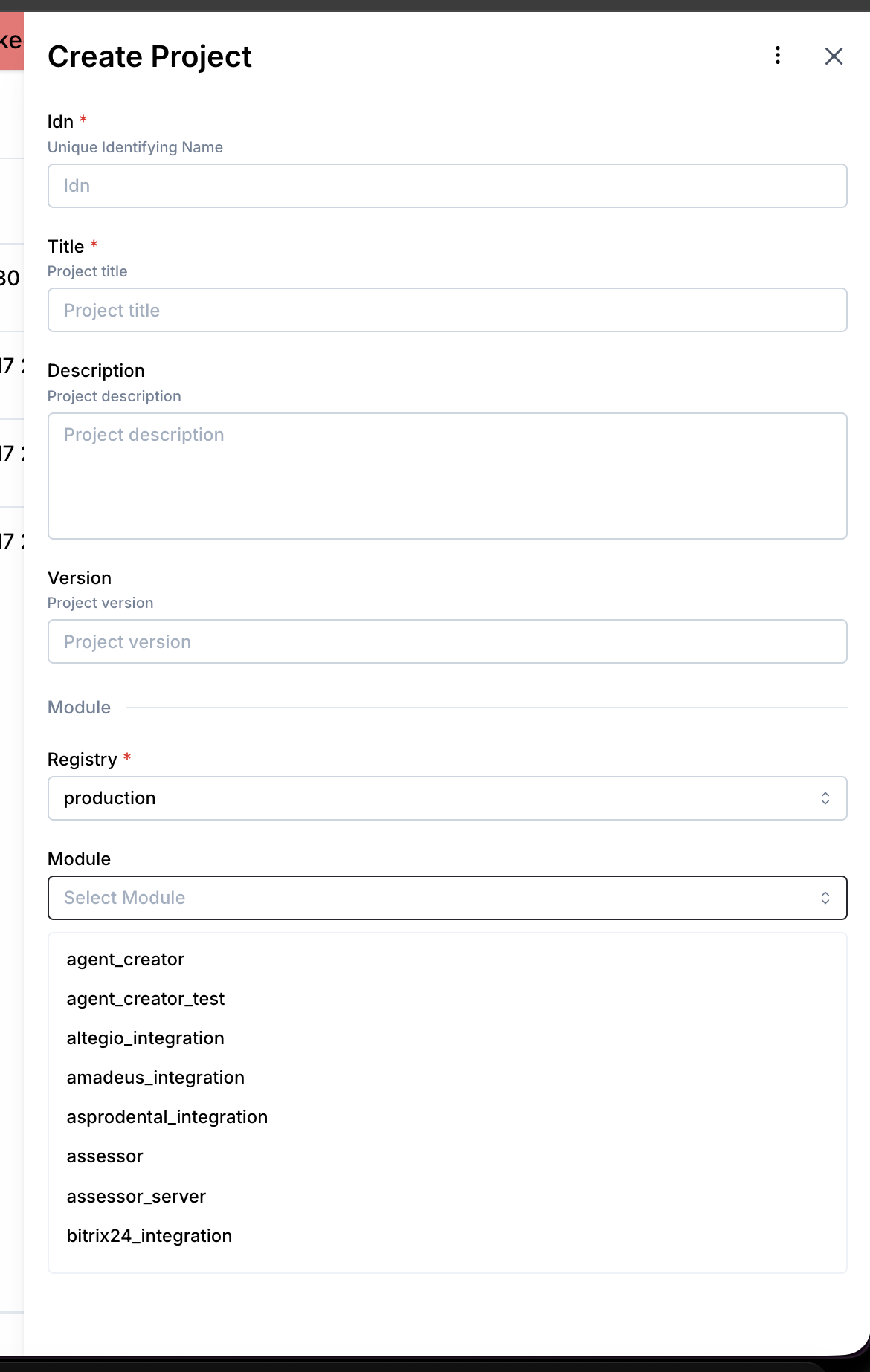 5. Leave Module version on Latest version unless support tells you to pin a specific version, then click Create.
3.1 Step 1 — Choose Authentication Method
Set hubspot_auth_type to one of:
OAuthToken
3.2 OAuth Setup
If you use OAuth:
- Open the authorization link from the
hubspot_oauth_codeattribute description in Newo. - Approve access in HubSpot.
- Copy the returned OAuth code.
- Paste it into
hubspot_oauth_code.
During setup, the integration uses that code when creating the HubSpot connector and then also triggers the connector's authorization_code action.
3.3 Token Setup
- Open HubSpot.
- Go to Settings > Integrations > Service Keys.
- Create a new key with the CRM / Meetings permissions your flow needs.
- Copy the generated token.
3.4 Step 2 — Find the Meeting Link Slug
Example:
- full link:
https://meetings-eu1.hubspot.com/test-meetings-page - slug:
test-meetings-page
Put only the last path segment into hubspot_slug_name.
3.5 Step 3 — Configure Attributes in Newo
Open Newo -> Projects -> Builder / Attributes and set:
| Attribute | Required | Description |
|---|---|---|
hubspot_auth_type | ✅ | OAuth or Token |
hubspot_oauth_code | Required for OAuth | One-time OAuth code copied from the HubSpot authorization page |
hubspot_service_key | Required for Token | HubSpot Service Key / PAT |
hubspot_slug_name | ✅ | HubSpot meeting link slug |
hubspot_base_api_url | ❌ | Defaults to https://api.hubapi.com |
hubspot_timezone | ❌ | Defaults to project business timezone |
hubspot_duration | ❌ | Slot length in minutes, default 30 |
hubspot_show_for_days | ❌ | Search window in days, default 1 |
hubspot_slots_available | ❌ | Enable / disable availability flow |
hubspot_booking_available | ❌ | Enable / disable booking flow |
hubspot_cancelation_available | ❌ | Enable / disable cancellation flow |
hubspot_sync_conversation | ❌ | Enable / disable outbound phone note sync |
hubspot_setup_scenarios | ❌ | Auto-add default booking/cancellation scenarios to canvas |
Hidden/system attributes are managed by setup automatically, for example:
hubspot_override_agent_attributessetup_persona_id
3.6 Step 4 — Publish
On publish, the current setup logic:
- syncs project attributes and tool-gating attributes
- injects booking and availability payload schemas
- ensures both
apiandhttpconnector entries exist forhubspot_connector - creates / reuses the setup persona
- validates the HubSpot connection with: the lookup request
Operational note:
OAuthrequests use theapiconnector pathTokenrequests use thehttpconnector path withAuthorization: Bearer <hubspot_service_key>
If hubspot_setup_scenarios = True, the integration also participates in workflow-builder canvas setup during canvas setup.
4. How It Works
4.4 Overall Sequence
5. Canvas Setup
canvas setup exists and auto-runs on:
gm_workflow_builder_canvas_built
Current behavior:
SetupLibrarySkillseeds customhubspot_*intents and scenarios into the library- Publish All adds common appointment and cancellation items to the active canvas
- auto-setup is controlled by visible attribute:
hubspot_setup_scenarios
How to test that everything works
6.1 Conversation Testing
Recommended live checks:
- publish the integration
- verify setup validation succeeds
- ask for availability on a concrete date/time
- book a new customer with email + phone
- cancel by exact appointment datetime
- test existing-client lookup by known phone number
6.2 Webhook Test Events
The integration also exposes test hooks for direct flow testing:
| Event | Flow | Purpose |
|---|---|---|
availability_wh | AvailabilityFlow | Trigger availability test payload |
book_wh | BookingFlow | Trigger booking test payload |
cancel_wh | CancellationFlow | Trigger cancellation test payload |
6.3 What to Verify
SetupFlow: token validation request succeeds- Canvas setup: default items are added when
hubspot_setup_scenarios=True AvailabilityFlow: returned slots match the current meeting-link behaviorBookingFlow: contact search/create works and booking endpoint accepts the chosen timeCancellationFlow: meeting search finds the correct meeting and delete succeedsExistingClientFlow:ExistingCustomerInfoappears and future bookings are stored
6.4 Troubleshooting
If setup fails:
- if using
OAuth, confirmhubspot_oauth_codewas pasted correctly and connector authorization completed - if using
Token, confirmhubspot_service_keyis valid - confirm the OAuth app / token has the scopes needed by your booking flows
- confirm
hubspot_base_api_urlis correct
If availability works but booking fails:
- verify the chosen time is still valid for the meeting link
- verify timezone alignment between
hubspot_timezone, user request, and HubSpot meeting settings - note that the current implementation computes free slots from
allUsersBusyTimes; HubSpot may still reject a time if it does not fit the meeting link's live availability settings
If existing-client lookup does nothing:
- confirm the incoming phone number/email matches a HubSpot contact
- confirm the contact has future meetings associated to it
If outbound note sync does nothing:
- confirm
hubspot_sync_conversation=True - confirm the session channel is exactly
Outgoing Phone
FAQ
Q: What authentication method does the current setup use?
A: The current setup supports both OAuth and Token through hubspot_auth_type.
Q: What does OAuth mode require from the user?
A: In the current implementation, the user opens the auth link from hubspot_oauth_code, approves HubSpot access, copies the returned code, and pastes it into hubspot_oauth_code.
Q: Does the current runtime use api or http routing?
A: OAuth uses the api path. Token uses the http path with a bearer token header.
Q: How are contacts matched during booking?
A: Booking first searches HubSpot contacts by email. If no contact is found, a new contact is created.
Q: How does cancellation identify the meeting to delete?
A: It converts the requested local datetime to UTC, searches meetings by exact hs_meeting_start_time, then deletes the found meeting ID.
Q: What customer context is injected into the prompt?
A: ExistingClientFlow injects ExistingCustomerInfo role="context" and stores future meetings in persona bookings.
Q: Why can availability say a slot is open but booking still fail?
A: The current availability logic derives free slots from allUsersBusyTimes. HubSpot booking still validates the submitted startTime against its own live meeting-link availability settings.
Q: Can I disable the default canvas scenarios?
A: Yes. Set hubspot_setup_scenarios to False.
Q: What is the meeting slug?
A: It is the last path segment of your HubSpot meeting link, stored in hubspot_slug_name.